

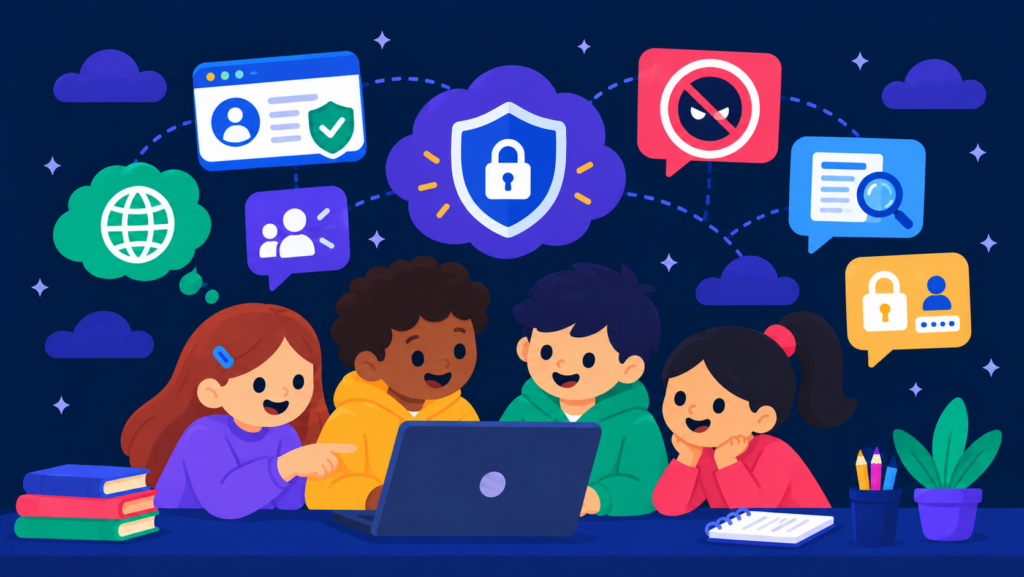
Developing Digital Skills for Children’s Online Safety
For today’s children, using the internet is an integral part of everyday life. They rely on digital technologies for learning, communication, entertainment, and creativity, while the online environment offers valuable opportunities for personal and educational development. At the same time, the increasing use of digital platforms highlights the importance of equipping children with the knowledge and skills they need to navigate the online world safely and responsibly.
According to the European Commission, children are increasingly exposed to online risks such as misinformation, cyberbullying, privacy breaches, online fraud, and age-inappropriate content. As their digital engagement expands, online safety education has become a fundamental component of digital literacy and digital citizenship.
Many of these risks are not immediately obvious. Children may share personal information without fully understanding the consequences, trust unreliable online sources, or struggle to respond appropriately to negative online interactions. Developing digital competence therefore goes beyond learning how to use technology. It also involves fostering critical thinking, responsible decision-making, and respectful online behaviour.
For children aged 8 to 13, this stage often marks a significant increase in digital independence as they gradually move from supervised use towards greater autonomy online. They begin creating accounts on online platforms, communicating more independently, and exploring a wider range of digital content. Digital safety education during this period should therefore go beyond identifying risks and help children develop practical strategies for dealing with them. Through discussion of real or simulated online situations, children can practise making safe choices, strengthen their media literacy and critical thinking, protect their personal information, communicate respectfully, and recognise when to seek help. Understanding that asking for help is a responsible response, rather than a sign of weakness, is especially important as their independence grows.
Schools and families play a complementary role in supporting the development of these skills. Consistent guidance from both teachers and parents, open discussions about online experiences, the use of real-life examples, and the integration of digital safety into everyday learning activities can strengthen children’s media literacy, critical thinking, and responsible decision-making. This shared support helps children build confidence, develop responsible digital habits, and use technology more safely and independently.
This is the approach adopted by the PowerUP project, funded by the European Commission. Rather than simply telling children what they should or should not do online, the project encourages them to become active participants in their own learning. Students design educational games and interactive scenarios addressing topics such as online safety, personal data protection, misinformation, and cyberbullying. Through this creative process, they analyse real-life situations, reflect on their own choices, and develop solutions that can also support the learning of their peers. Learning through creativity and collaboration transforms online safety education into a meaningful and engaging experience. By contributing to the development of educational resources, children not only strengthen their own digital competences but also help create a safer, more responsible, and more inclusive online environment.
Online safety should be understood not merely as a set of rules but as a continuous process of learning and competence development. Through collaboration among schools, families, and educational initiatives such as PowerUP—a project that develops educational games, applies the learning by creating methodology, and promotes the development of digital safety competencies among children aged 8–13—children can acquire the knowledge, skills, and attitudes necessary to use digital technologies in a responsible, critical, and confident manner.
References:
- European Commission. European Strategy for a Better Internet for Kids (BIK+).
- European Commission. Protecting Children Online – Growing Up in a Digital World.
- EU Kids Online. Research on Children’s Online Opportunities, Risks and Safety.
- Child Online Protection.